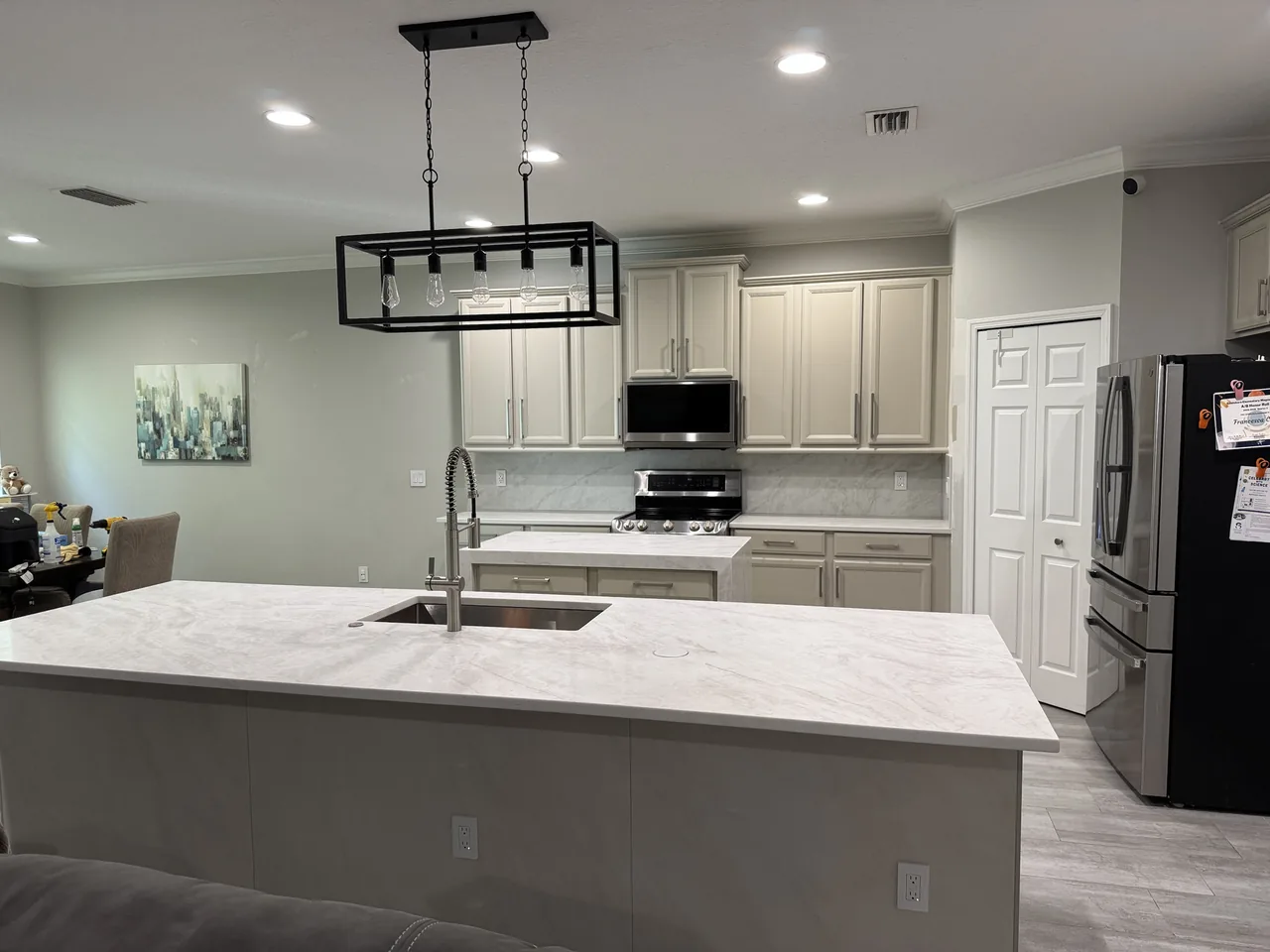
Can my cabinets be painted?
Usually, if the boxes are sound and you can live with the layout. Solid wood and previously painted cabinets take the finish well. What doesn't: particleboard that's swollen from water (check under the sink), and vinyl-wrapped doors that are peeling.
- Oak and other open-grain wood can show grain through the finish. We'll show you what to expect before you decide.
- Dark-stained wood going to white can bleed tannins through a finish. We block it with a stain-blocking primer before the color goes on, and we'll tell you up front if your cabinets need that step.
- Old cabinets won't always look brand new. Wear and old repairs can still show a little. Better you hear that from us now.
- If the layout is the problem, paint won't fix it. That's a kitchen renovation, and we do those too.
Not sure? Text us two photos: a door open showing the hinge side, and the inside of the box under the sink. We can usually tell from that. More on the decision in paint, reface or replace.
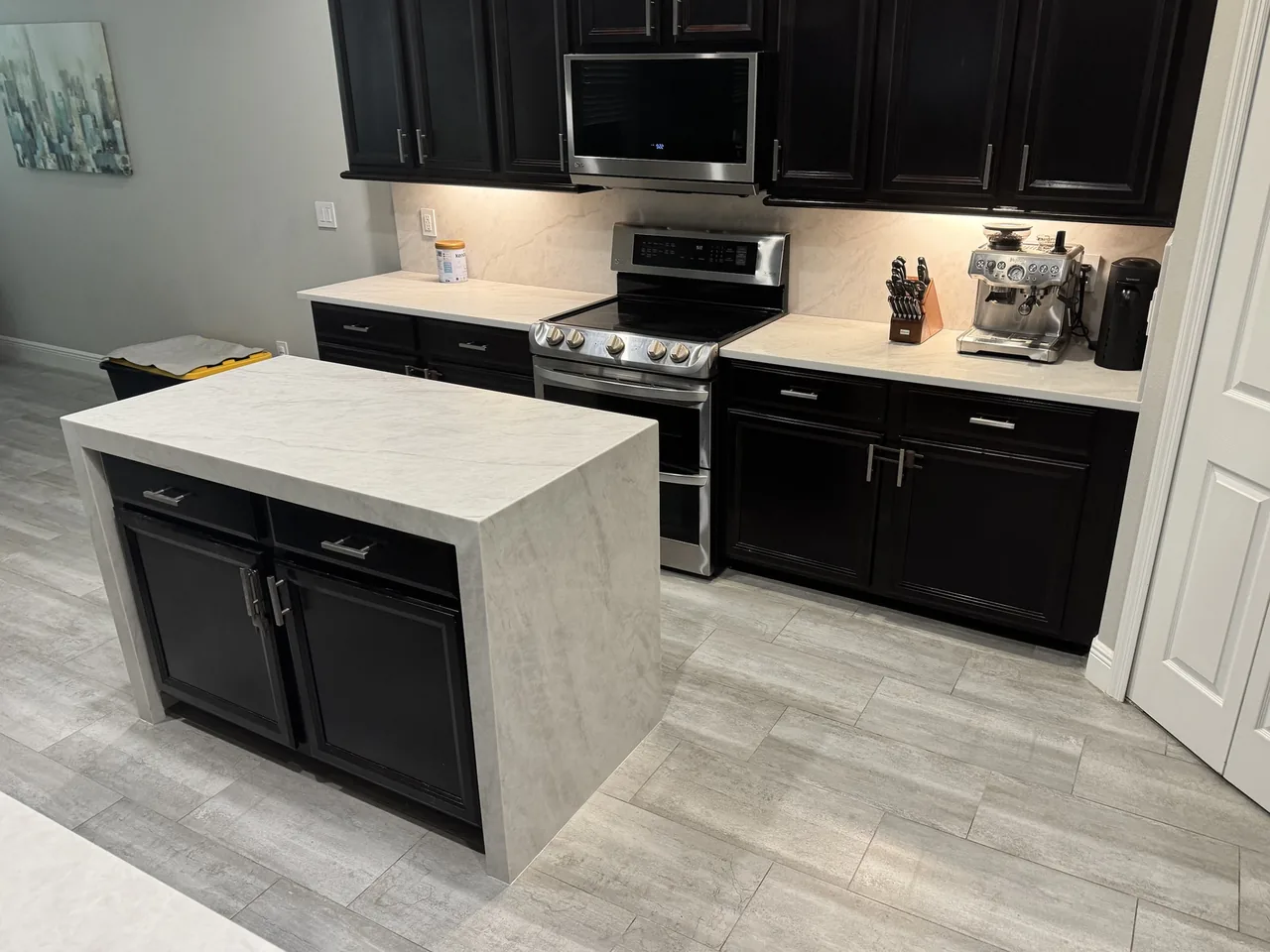
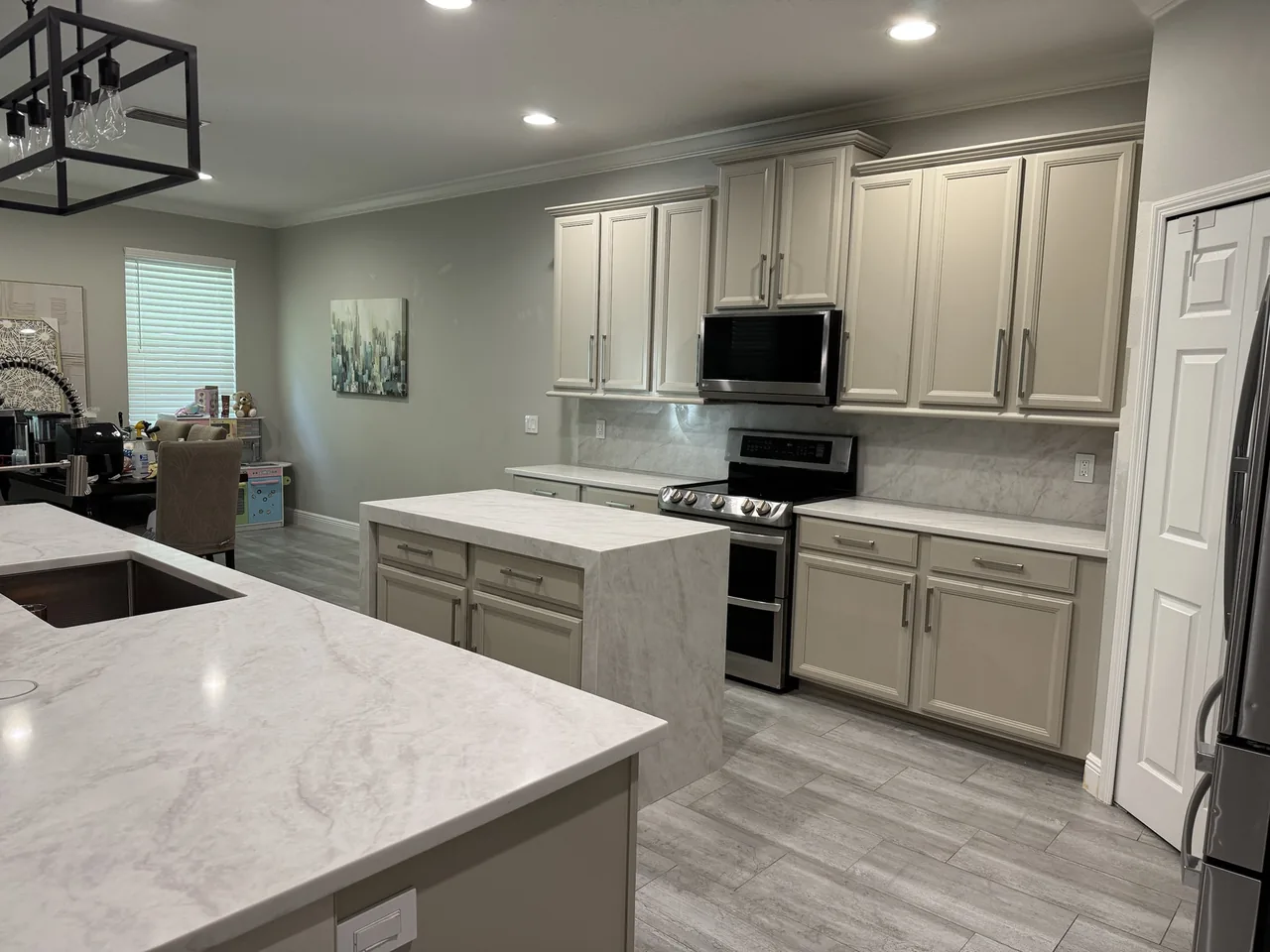
What does a 2K finish mean?
2K means two components. The coating is mixed with a hardener right before it goes on, and the two react and cure into a hard shell. It doesn't mean two coats, though we do put on two.
The one we use is ILVA PW710, a water-based two-part polyurethane made for kitchen cabinets, in a 30 sheen, mixed with ILVA's TXW08 hardener. ILVA is an Italian wood-coatings company whose products mostly go on furniture and cabinets at the factory. Being water-based, it's low-odor next to a solvent finish, which matters when we're spraying inside your home. It's the best cabinet finish we've worked with, and we've tried a few. That's our experience with it, not a lab result. The tested numbers are on the manufacturer's data sheet, and the longer explanation is in why we use a 2K finish.
Isn't regular cabinet paint good enough?
A lot of painters use Sherwin-Williams on cabinets: Emerald Urethane, which goes on with a brush or roller, or Gallery Series, their spray-only cabinet coating. Those are good paints, and we used them ourselves before we switched. The catch is that both are one-part products. They dry and harden on their own, without a hardener mixed in, and a one-part finish doesn't cure as hard as a catalyzed one. On a bedroom door that's fine. On the drawer everyone opens fifty times a day and the door next to the stove, that's where a softer finish wears through first.
We use a two-part finish that cures into a hard shell, closer to plastic than to paint, and we spray it. Spraying is what gives you the factory look: no brush marks, no roller texture, just a smooth, even skin over every door and drawer front. With the prep done right, it bonds to the door the way a factory finish does, and it looks and feels like one. That's what "like new" means here.
What's in the prep
This is most of the job. Cabinets have years of grease and hand oil on them, and nothing sticks to that. So: set up the spray booths and protect everything in the room, clean and degrease, fix dings and loose pieces, sand. Then two coats of primer, sanded in between to catch anything we missed, and only then the two finish coats. Skip a step and the finish chips at the handles within a year.
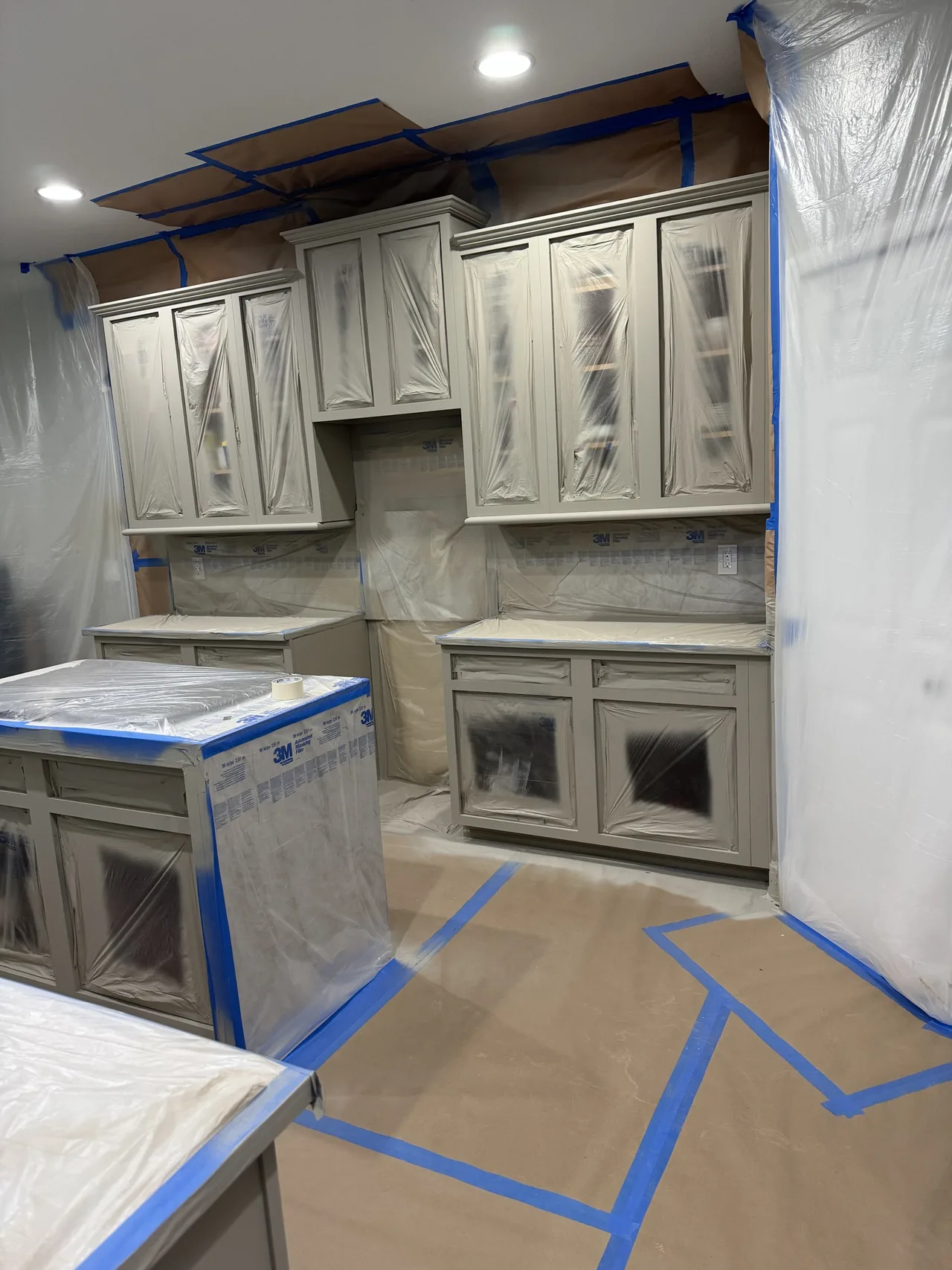
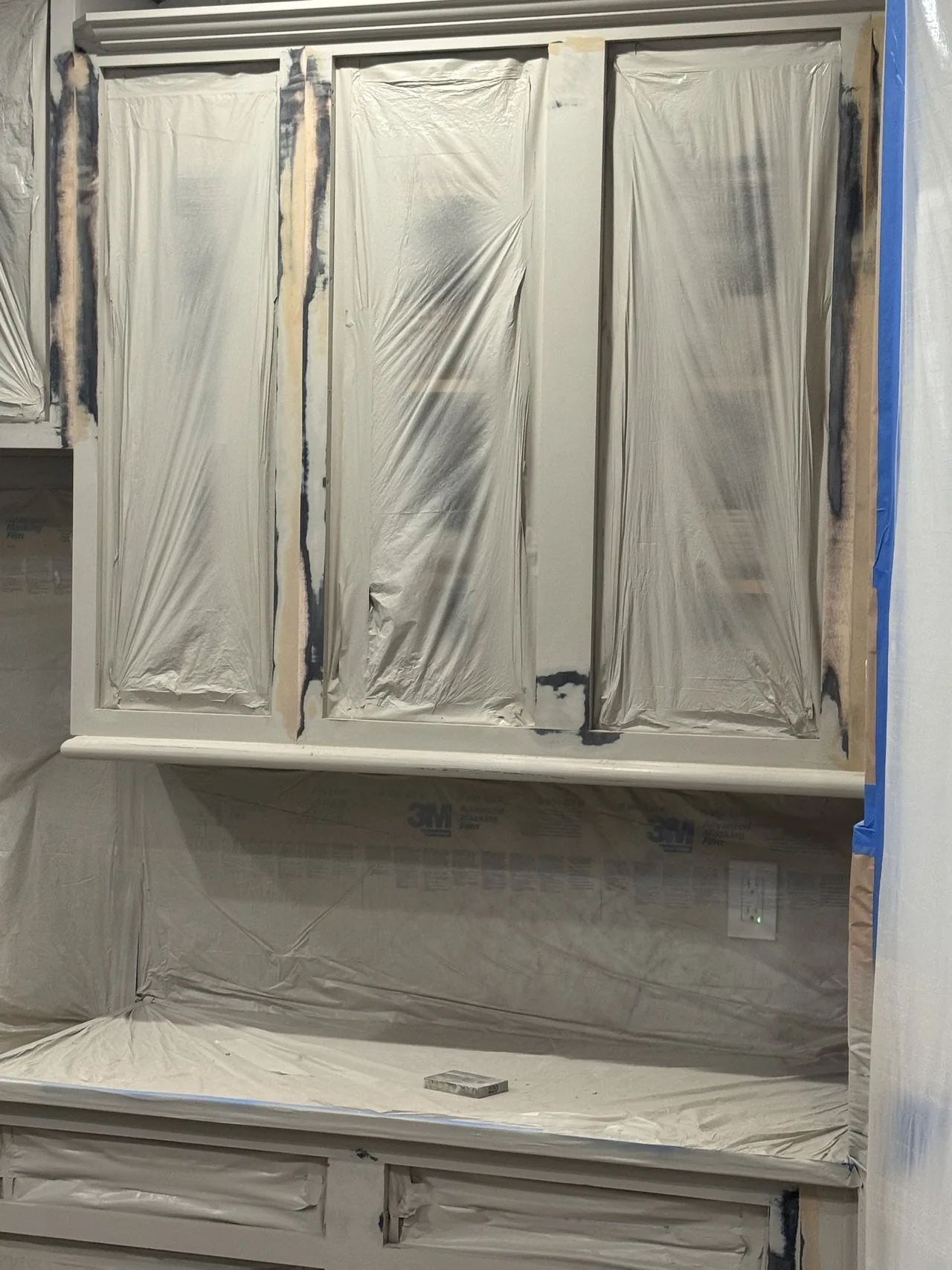
We spell out what your cabinets get: doors, drawer fronts, the boxes, whether interiors are included, what happens with the hardware, and any repairs.
How long will I be without my kitchen?
About five business days for an average kitchen. Bigger kitchens and heavy repairs take longer, and you'll know your dates before we start. A typical week looks like this:
- Day 1Prep. Spray booths go up, everything in the room gets protected, then cleaning, degreasing and sanding.
- Day 2Primer. Two coats, with a sanding in between on any spots that need it.
- Day 3First top coat of the ILVA 2K finish, sprayed.
- Day 4Second top coat, sprayed.
- Day 5Everything goes back together: doors, drawers, hardware, and the room cleaned up.
Ask us what you'll still be able to use during the week. It depends on the kitchen.
Painting vs replacing
In our experience, painting runs roughly 50 to 75 percent less than replacing the cabinets, depending on what you'd replace them with. And it's about a week, not weeks of waiting on a cabinet order with the kitchen torn out.
Things people add while we're there, priced separately:
- New handles and pulls. We fill the old holes and drill for the new ones before the finish goes on, so nothing shows.
- Soft-close hinges in place of the old ones.
- Cabinet interiors, islands and end panels, if they're not already in the scope.
Pricing
Every job is different, so we don't post prices. Call us or send us an inquiry, and we'll talk through options that fit your budget.
When can I use them again?
The data sheet for the finish we use says dry to the touch in one to three hours and cured in eight to twelve hours at 68°F. Florida heat and humidity move those numbers, and "cured" isn't the same as "ready for a scrub brush." So we'll tell you, for your kitchen, when the doors can close, when you can use it normally, and when you can start cleaning it hard.