
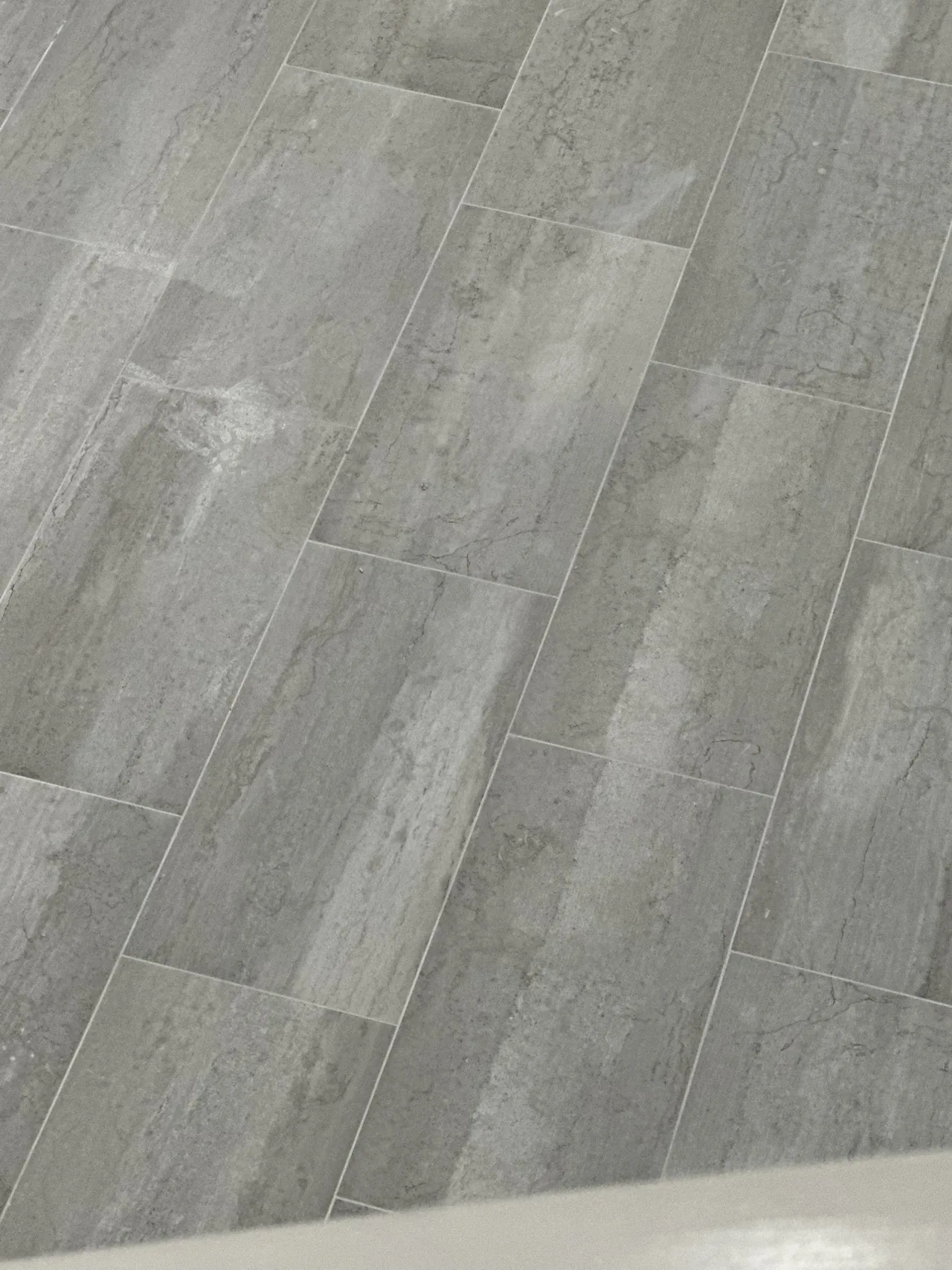
Before and after: dark laminate to gray plank tile
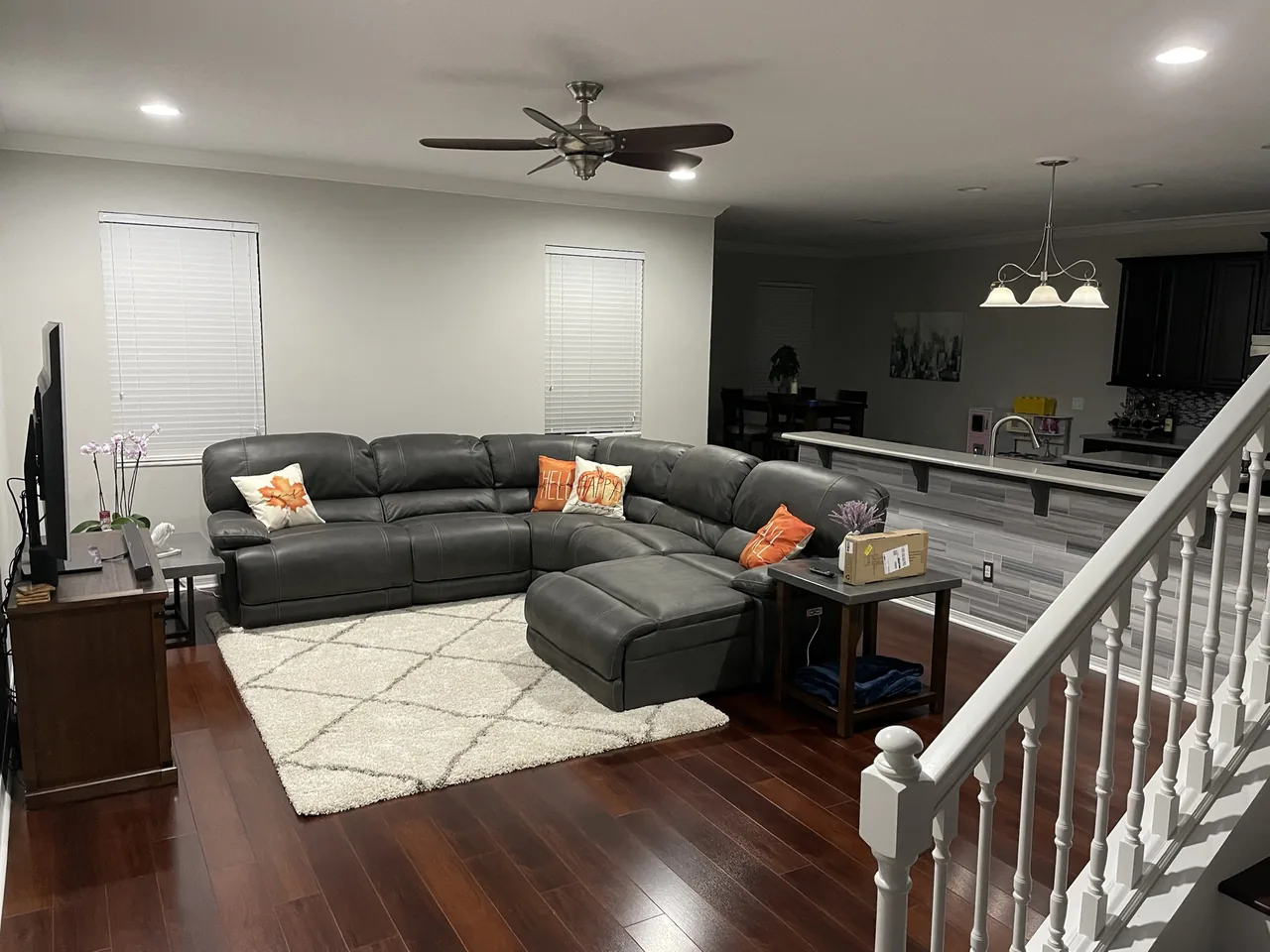
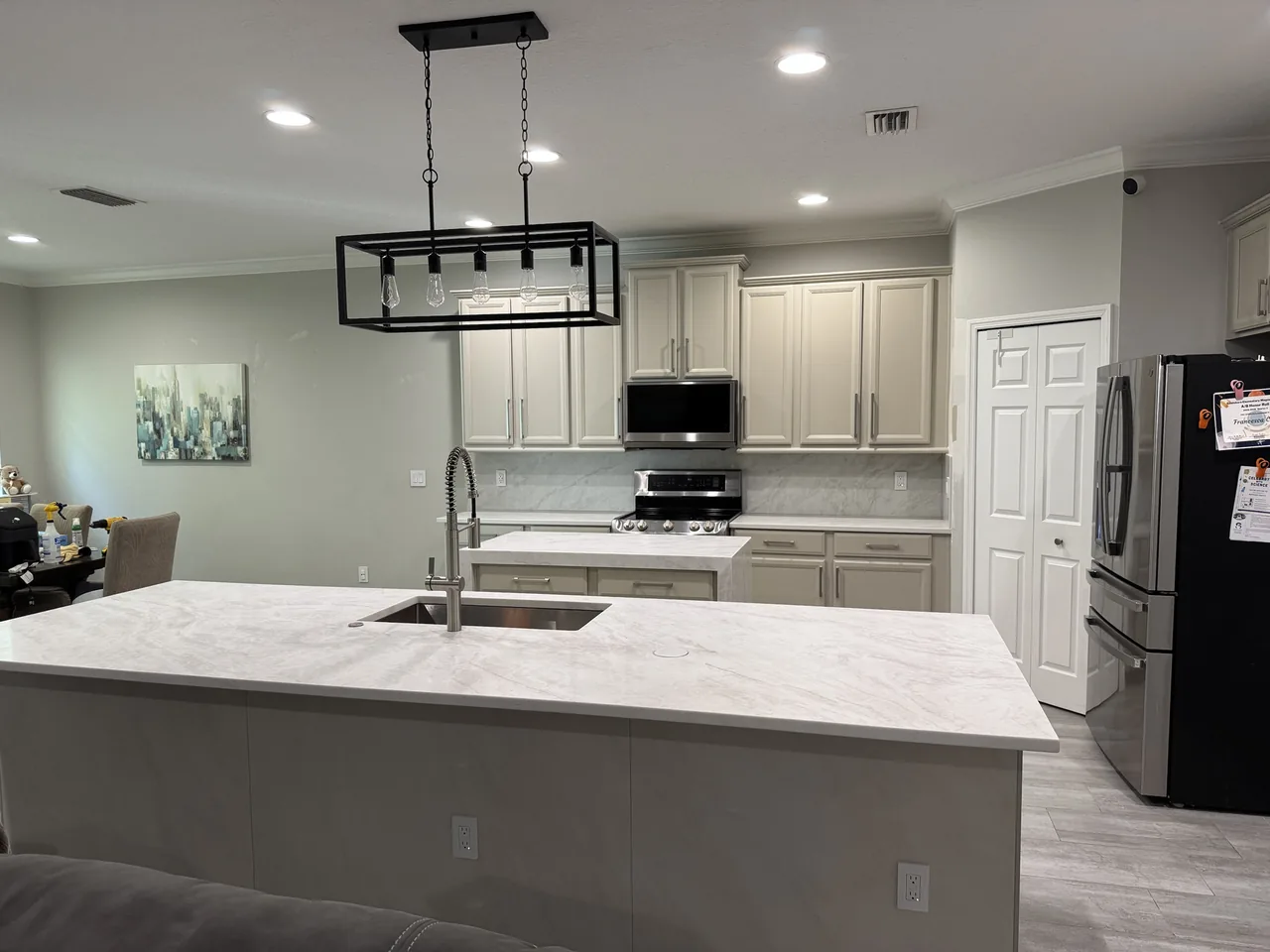
Tile, wood, LVP or laminate?
Bathrooms and anywhere wet: tile. Busy house with kids and dogs: LVP holds up well. Laminate gets you a wood look for less, but keep it away from standing water. Real wood is warm and can be sanded down later, but it's the touchiest about moisture.
| Tile | Wood | LVP | Laminate | |
|---|---|---|---|---|
| Water | Best. The one for showers and wet areas | Not for bathrooms | Good. Many are water-resistant, check the product | Wipe up spills. Standing water is a problem |
| Underfoot | Hard and cool | Warm | Softer and quieter than tile | Firm. Can sound hollow without good underlayment |
| Kids and pets | Tough. Grout needs upkeep | Scratches show | Holds up well | Resists scratches. Edges don't like water |
| Repairs | Swap a tile if you kept spares | Solid wood can be refinished | Planks can usually be swapped | Planks can usually be swapped |
| Install time | Longest. Setting, curing, grout | Depends on type and subfloor | Usually fastest | Usually fast |
The general picture. Every product is a little different. If it's between wood and tile, we wrote up the tradeoffs for Florida houses.
Tile
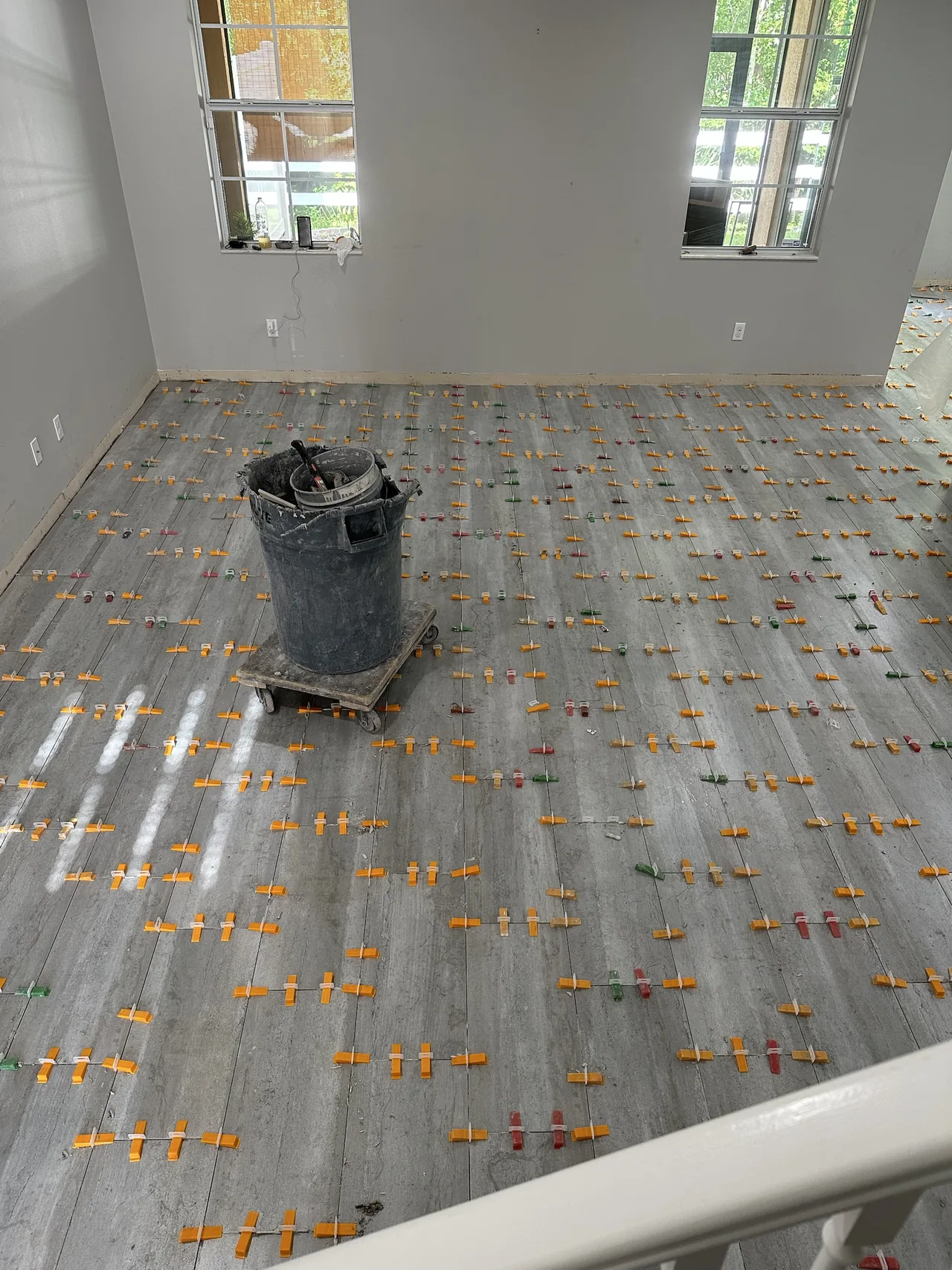
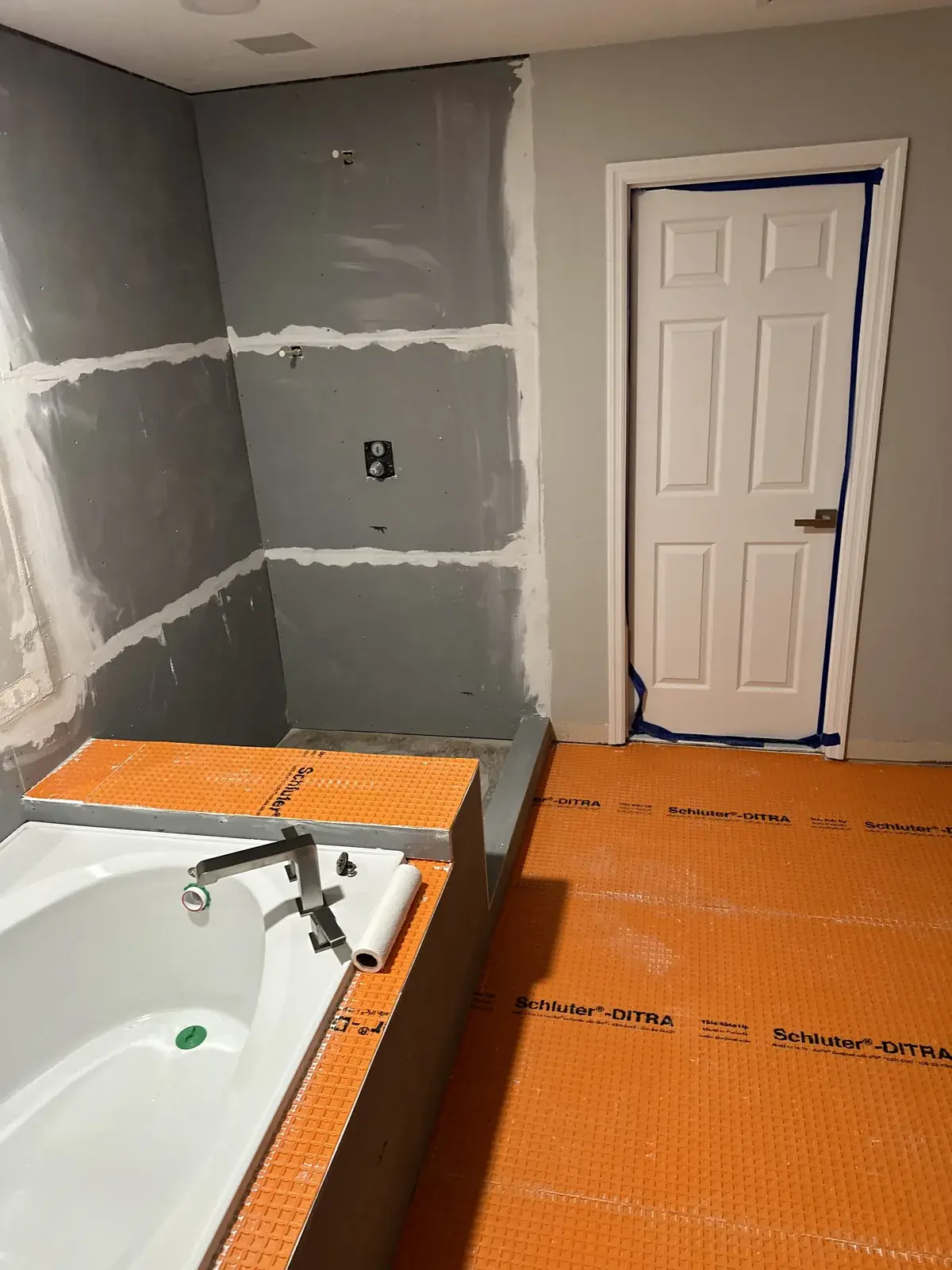
We lay it out before we set anything, so you don't end up with a sliver at the doorway. Big tiles get a leveling system so the edges stay flush. Where the slab calls for it, an uncoupling membrane goes down first so slab movement doesn't crack the tile.
Wood
Most houses around here sit on a concrete slab, and that limits your options. Engineered wood usually works better on slab than solid. We check moisture and flatness before anything goes down.
LVP and laminate
Both go in fast and look good. LVP handles spills better, so it's the one we'd pick for kitchens and busy rooms. Either way, plank floors telegraph every dip in the subfloor. We check it and fix it first.